


Namik Ranthan Trek — Kumaon's Most Rewarding Secret

Ancient trade routes, rhododendron forests, ridge meadows, and a cross-valley traverse that barely makes it onto any map. This is what real Kumaon trekking feels like.
What is the Namik Ranthan Trek?
Most people who love the hills have heard of Pindari Glacier or Milam Valley. Very few have heard of Namik. That is exactly the point.
The Namik Ranthan Trek is a hidden route through the Ramganga valley in Pithoragarh district, deep inside the Kumaon Himalayas of Uttarakhand. It connects the ancient Bhotia village of Namik — once a key stop on the old Indo-Tibetan trade route — with the high ridge meadows of Ranthan Kharak, the summit of Ranthan Top at 13,650 ft, and the remote Talla Jauhar valley via Sursundari Pass.
"Namik village is where the Himalayas still live at their own pace — organic farms, Ringaal carvings, mountain streams, and a stillness that stays with you long after you leave."
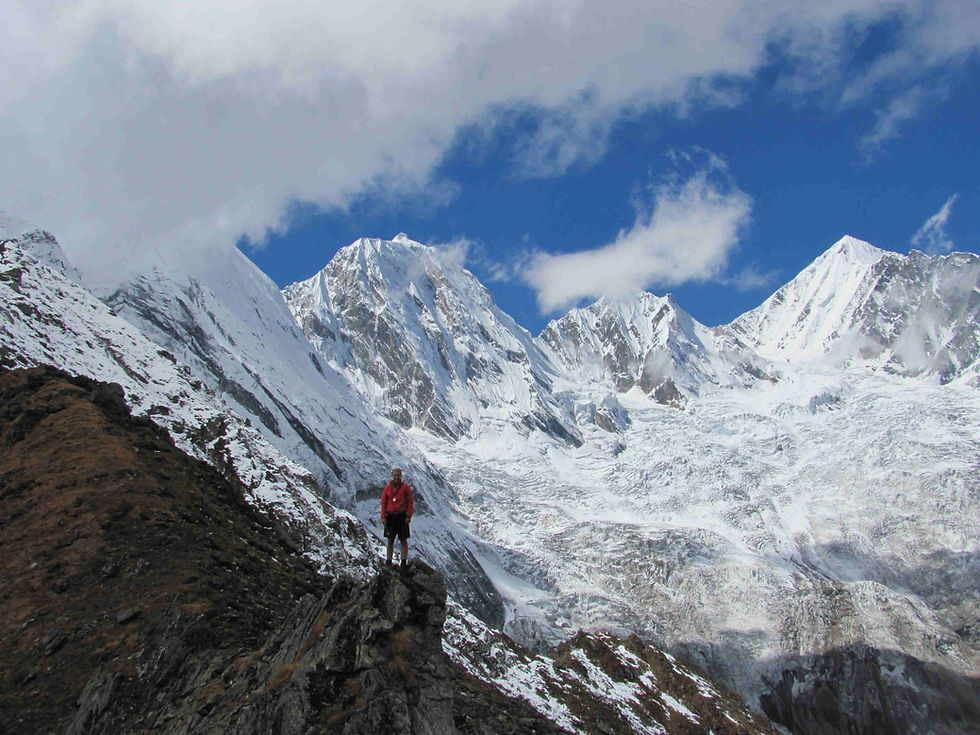
The trail follows the Ramganga River through forests of Rhododendron and Kharsu oak, climbs past Thala Bugyal meadows and the Ranthan Kharak ridge, and delivers you to Ranthan Top — a 360° summit with unobstructed views of Nanda Devi (7,848 m), Nanda Kot (6,861 m), Trishul (7,120 m), and the Panchachuli range. The trek then crosses Sursundari Pass into the rarely visited Talla Jauhar valley — a cross-valley traverse that makes this route truly one of a kind.
You enter one valley. You exit another. That is what makes the Namik Ranthan Trek different from everything else in Kumaon.

It is not a tourist circuit. It is a real Himalayan trek — and Wildrift Adventures is one of the very few Kumaon trek experts who know it inside out.
Why Should You Do the Namik Ranthan Trek in Kumaon?
6 Reasons This Trek Stands Apart
Almost zero crowd — you may meet only shepherds for days at a stretch
Cross-valley traverse via Sursundari Pass — you enter Namik valley and exit Talla Jauhar valley, two completely different worlds in one trek
The Ramganga valley trail is one of the most scenic low-altitude forest approaches in Kumaon
Ancient Bhotia villages with Ringaal wood carvings, sheep wool craft, and Indo-Tibetan trade heritage
360° panoramic views of Nanda Devi, Nanda Kot, Trishul, and Panchachuli from Ranthan Top
Easy-moderate difficulty — first-time Himalayan trekkers can attempt this with basic fitness
Namik Ranthan Trek - Day-by-Day Itinerary
The route starts from Gogina village (road head), climbs through Namik village, Bajemania, Thala Bugyal, and Ranthan Kharak before summiting at Ranthan Top and crossing Sursundari Pass into Talla Jauhar valley, descending to Dwaligaad. A true cross-valley traverse over 8 days.
Day 1 | Reach Kathgodam → Drive to LitiDrive from Kathgodam to Liti in Ertiga / Innova (8–9 hrs). Breakfast and lunch en-route. Evening: briefing about the trek and preparation with your Wildrift trek leader. Overnight at homestay. |
Day 2 | Gogina (Road Head) → Namik Village — 6 kmMorning breakfast followed by a short drive to Gogina, the road head. Trek begins — 6 km to Namik village at ~8,000 ft. Lunch at a village house. Namik is a charming village known for organic farming, local Ringaal (bamboo) carving, and sheep wool craft. Overnight in trekking tents or village houses. |
Day 3 | Namik → Thala Bugyal via Bajemania — 9 kmTrek from Namik to Thala Bugyal at 10,300 ft via Bajemania (9 km). The climb passes through forests of Rhododendron and Kharsu oak, beautiful meadows, and Chaanis (temporary cattle sheds used by local shepherds). Overnight camping at Thala Bugyal. |
Day 4 | Thala Bugyal → Ranthan Kharak — 7 kmA steep climb to Ranthan Kharak at 12,000 ft (7 km), through open bugyals and stony paths. Snow-clad mountain views open up as you gain altitude — one of the most dramatic days of the entire trek. Overnight camping at Ranthan Kharak. |
Day 5 | Ranthan Kharak → Ranthan Top → Bajemania — 9–10 kmEarly morning start for the highest point of the trek — Ranthan Top at 13,650 ft. Panoramic Himalayan views from the summit, then trek back down to Bajemania for overnight camping. A long but deeply rewarding day. |
Day 6 | Bajemania → Ruigair via Sursundari Pass — 7 kmToday the trail crosses into a completely different world. From Namik valley, the route enters the Talla Jauhar valley via Sursundari Pass at 10,400 ft (7 km). A genuine cross-valley traverse — remote, raw, and rarely walked. Overnight at Ruigair. |
Day 7 | Ruigair → Dwaligaad → Drive to Chaukori — 7 kmA downhill trek of 7 km through thick forest of Ringaal, Kharsu oak, and Rhododendron — crossing streams and walking trails that rarely see other trekkers. Chances of spotting the Himalayan Black Bear in this section. End the trek at Dwaligaad, then transfer to Chaukori (2.5 hrs drive) for the night. |
Day 8 | Chaukori → Kathgodam — DepartureEarly morning departure from Chaukori for Kathgodam. The drive back carries the last views of the Kumaon ranges as the mountains slowly give way to the plains. Trek ends at Kathgodam. |
What is the Camping Experience Like on the Namik Ranthan Trek?
This is not glamping. And that is exactly why people love it.
Camps are pitched on open meadows, at forest clearings, and right at the glacier edge. Your cook team sets up before you arrive. Freshwater springs (naulas) dot the trail. Evenings are bonfires and hot chai; mornings are the quiet sound of birds before the sun clears the ridgeline.
Silhouetted trekkers on grassy ridge with Namik trek
Tent and Bedding
Double-layer dome tents with sleeping bags rated for sub-zero temperatures. Mat included. No sleeping on the cold ground.
Meals at Camp
Three hot vegetarian meals daily — dal, rice, sabji, roti, and local Kumaoni dishes. Fresh produce sourced from villages along the way.
Village Homestays
At Namik and Gogina, you stay with Bhotia families in traditional mountain homes. Simple, warm, and deeply memorable.
Off the Grid
Mobile connectivity is limited once you pass Gogina. That is not a bug — it is a feature. A true digital detox in the heart of the Himalaya.
Bonfire Evenings
Every campsite ends with a bonfire. Stories, star-gazing, and silence broken only by the Ramganga rushing somewhere far below.
Water & Hygiene
Clean water from mountain springs throughout. Trek teams carry water purification. Bio-toilets or designated dig spots are maintained at camp. Responsible waste management is maintained at every camp - Check our camps
Best Time to Do the Namik Ranthan Trek
The trek has two ideal windows: pre-monsoon (April to June) and post-monsoon (September to October). Both are exceptional but feel completely different.
Season | Month | Conditions | Verdict |
Spring | April – June | Rhododendrons in full bloom, clear skies, comfortable temps (10–15°C day, 0–5°C night) | ✔ Best for flowers & colours |
Monsoon | July – August | Heavy rainfall, slippery trails, landslide risk on approach roads | ✘ Avoid |
Autumn | September – October | Crystal-clear air, freshly washed landscape, best mountain views, stable weather | ✔ Best for peak views |
Winter | November – March | Snow-blocked trails above Namik, very cold nights, limited access | ⚠ Experts only |
"Trek in April for the rhododendrons. Trek in October for the clearest view of Nanda Devi you will ever see from Ranthan Top."
How to Reach the Namik Ranthan Trek Starting Point
The trek begins from Gogina village in Bageshwar district. Here is the complete route from major cities.
Delhi / NCR → Kathgodam (Train)
Multiple overnight trains connect New Delhi to Kathgodam (Ranikhet Express, Uttarakhand Sampark Kranti). Journey time: ~7–8 hours. The most comfortable way to begin your journey.
Kathgodam → Liti (Road, 8–9 hrs)
Wildrift picks you up from Kathgodam in an Ertiga or Innova. Breakfast and lunch are arranged en-route. Arrive at Liti by evening for trek briefing and overnight homestay.
Liti → Gogina (Short Drive — Road Head)
A short morning drive from Liti to Gogina — the road head where the trek officially begins. From here, boots on the ground and into the Ramganga valley.
By Air: Fly to Pantnagar Airport
Pantnagar is the nearest airport. Taxi onward to Kathgodam for pick-up by the Wildrift team. Air connectivity is limited — train to Kathgodam remains the preferred option.
Frequently Asked Questions About the Namik Ranthan Trek
Is the Namik Ranthan Trek suitable for beginners?
Yes. The trek is rated easy-to-moderate. Trails are well-defined and daily distances are manageable at 6–10 km. Basic fitness — comfortable walking 8–10 km a day — is sufficient. The steep section on Day 4 and the long summit day on Day 5 require some fitness preparation, but no prior Himalayan trekking experience is needed.
What is the total distance of the Namik Ranthan Trek?
The complete route covers approximately 55 km over 6 trekking days (Days 2–7). Daily distances range from 6 km to 10 km. The longest day is Day 5 — Ranthan Top summit and descent to Bajemania at 9–10 km.
What is the highest point of the Namik Ranthan Trek?
The highest point is Ranthan Top at 13,650 ft (4,160 m) reached on Day 5. This is a ridge summit offering 360° panoramic views of the Kumaon and Garhwal Himalaya.
What is the best month to do the Namik Trek?
April to June and September to October are the two best windows. April and May offer blooming rhododendrons on the Thala Bugyal and Ranthan Kharak sections. September and October deliver the clearest mountain views of the year. Wildrift schedules fixed departures in both windows.
What makes the Namik Ranthan Trek different from other Kumaon treks?
This is one of the very few Kumaon treks that is a genuine cross-valley traverse — you enter the Namik valley from Gogina and exit through the Talla Jauhar valley via Sursundari Pass. You do not return the same way. This, combined with the Ranthan Top summit, ancient Bhotia village stays, and the remote Dwaligaad forest descent, makes it a complete Himalayan experience in 8 days.
Do I need any permit for the Namik Kunjkharak Trek?
No special Inner Line Permit is required for Indian citizens. Standard forest entry formalities may apply. Wildrift Adventures specialises in Kumaon treks and handles all documentation and permits on your behalf — so you show up, and they take care of the paperwork. Foreign nationals should check current Pithoragarh frontier belt regulations before booking.
What to Pack for the Namik Kunjkharak Trek
Pack light. The mountains give you everything else.
Trekking shoes (ankle support, waterproof)
Warm jacket / down layer
Rain jacket or poncho
Moisture-wicking base layers (x3)
Trekking pants (x2)
Woollen cap, gloves, neck buff
Sunglasses (UV protection)
Headlamp with spare batteries
Trekking poles (optional but helpful)
Day backpack (20–25 litres)
Water bottles (2 × 1 litre)
Sunscreen SPF 50+
Personal first aid / medicines
Dry snacks (nuts, energy bars)
Camera / power bank
Permits and ID cards
Who Runs the Namik Ranthan Trek? Popular Trek Operators in Kumaon
This is not a trek you should attempt solo without prior high-altitude experience. The right operator makes all the difference — from logistics to local knowledge to safety.
Wildrift Adventures
Based in Nainital, they runs fixed-departure and private treks across the Kumaon and Garhwal Himalaya with a deep emphasis on responsible, immersive trekking. Their Kumaon roots mean local access, honest itineraries, and guides who know the Ramganga valley like their own backyard. This is the trek operator we recommend for Namik.
Why Trek the Namik Ranthan with Wildrift Adventures?
Most people who trek with Wildrift Adventures once, come back. That is not accidental.
Wildrift Adventures is not just plan trek for you. It help to explore everything that make them different from others. It is a mountain community built by people who live in Kumaon — and that changes everything about how the trek feels. Your guide does not read off a laminated sheet. They have walked this valley in every season. The cook knows which village to source fresh vegetables from. The campsite at Ranthan Kharak is chosen because the sunrise view of Nanda Devi from that ridge is worth every steep step of Day 4.
Wildrift Adventures runs the Namik Trek as both a fixed-group departure (best for solo travellers seeking community) and a private custom trip (best for families, couples, and corporate teams). Planning a group or office retreat? See how we design corporate trekking retreats in Uttarakhand. Both are available in the April–June and September–October windows
Small groups. Responsible camping. No trace left behind. The full Pahadi experience — with warmth, humour, and proper chai.
Ready to Walk the Namik Ranthan Trail?
The Namik Ranthan Trek runs from April to June and September to October. Limited spots per batch. Wildrift Adventures keeps groups small on purpose — so the mountain does not feel crowded, and you do not feel like a number.


Comments